


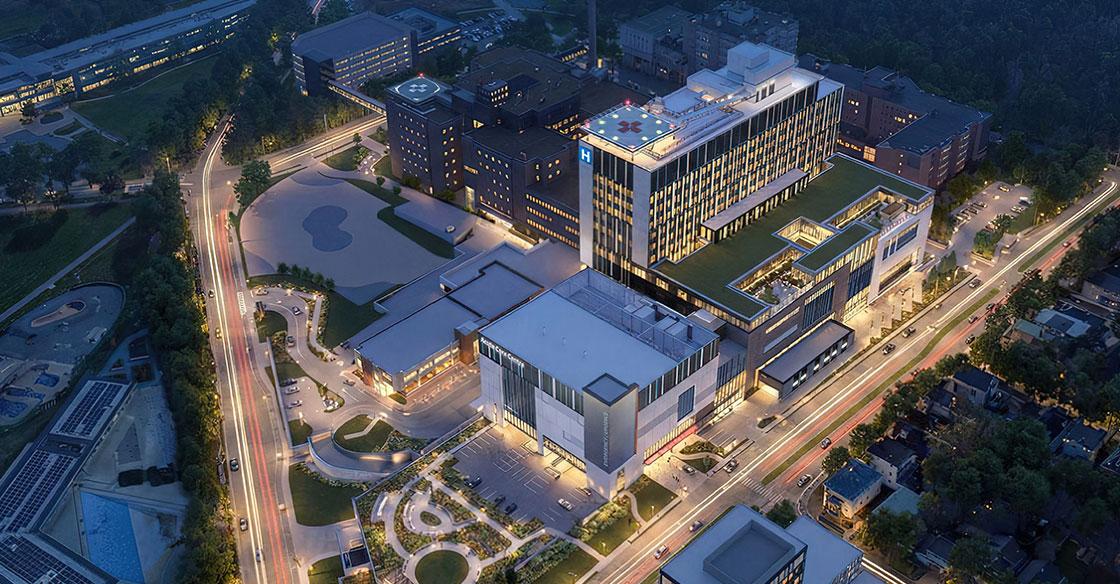
Pictured: Architectural rendering of the complete Acute Care Tower in Fall 2031. Rendering is for illustrative purposes only and is subject to change.
From a new 14-storey acute care tower to state-of-the-art operating rooms and an emergency department nearly double its current size, the future of health care is taking shape in Halifax.
Cranes are in the air. Construction is reaching new heights. And at the QEII Health Sciences Centre's Halifax Infirmary site, Atlantic Canada's largest-ever healthcare infrastructure project is coming to life.
On October 21, guests at the QEII Foundation's 2026 Friends of the QEII Foundation Fall Tea went behind the build with Randi Monroe, Executive Director for Central Zone Redevelopment at Nova Scotia Health, for an exclusive look at QEII Renew.
From exciting architectural renderings to little-known details about what's being built, Randi (pictured below) shared how this once-in-a-generation redevelopment will reshape the QEII and the future of specialized care in Nova Scotia. Here are some highlights from her presentation.
 Q: Just how big is QEII Renew and how is construction progressing?
Randi: It's massive. The Halifax Infirmary Expansion Project is the largest healthcare infrastructure project ever undertaken in Atlantic Canada, adding more than one million square feet of new space to the QEII.
And we're making incredible progress. Four tower cranes have become a familiar sight across Halifax, and construction on the new 14-storey Acute Care Tower has passed the halfway point vertically. Two of those cranes are expected to come down as major structural work progresses.
There's still plenty happening behind the scenes, even as the building rises. Interior construction, equipment installation, testing and staff preparations will continue over the coming years, with the new tower expected to welcome its first patients in fall 2031.
Q: What are some of the most exciting features patients and families can look forward to?
Randi: One of the things I'm most excited about is how different the patient experience will be. The new tower will feature 216 private inpatient rooms, each with its own bathroom, large windows bringing in natural light and a sleeper sofa so loved ones can stay overnight.
Imagine being able to rest, recover and have private conversations with your healthcare team, while knowing your family can remain close by.
Every room will also have a ceiling lift to help patients move safely, while reducing the physical strain on healthcare teams. These may seem like small details, but together they'll make an enormous difference in how patients experience care.
Q: The new emergency department will be nearly twice the size of the current one. What will make it different?
Randi: It's not simply about building a bigger emergency department. It's about creating a space that works better for the different patients who need it.
The new department will have dedicated areas for trauma, mental health and geriatric care, along with diagnostic imaging integrated directly into the emergency department. For patients experiencing time-sensitive emergencies, like a stroke, faster access to diagnostic imaging can make a critical difference.
We've also involved emergency healthcare teams throughout the design process, including visits to newly built emergency departments across Canada to learn what's working well and what we can do even better here in Nova Scotia.
Q: What about the new operating rooms? How will they change surgical care at the QEII?
Randi: The new tower will feature 16 state-of-the-art operating rooms, including two hybrid operating rooms that combine advanced imaging and surgical capabilities.We're designing these spaces around leading-edge technology, including surgical robotics, integrated video systems and equipment mounted from the ceiling to give healthcare teams greater flexibility.
One of the most fascinating parts of the process is how we're testing the designs before construction is complete. We've built full-scale mock-ups of operating rooms, and surgical teams have been able to practise how they'll move and work in the spaces. This includes using full-scale models of surgical robots, made from wood and cardboard, to test how the equipment and healthcare teams will move within the rooms.
It means we're not simply imagining how these rooms will function. We're working directly with the people who will use them to make sure they're designed for the realities of patient care.
Q: With so much attention on the new tower, is QEII Renew about more than one building?
Randi: The new Acute Care Tower is an extraordinary milestone, but it's only one piece of a much larger vision for health care.
We're also looking decades into the future through the Central Zone Master Plan, which considers how our hospitals, services and healthcare spaces will need to evolve as Nova Scotia's population grows and ages.
That means exploring everything from future cancer care and rehabilitation facilities to how more services could be delivered closer to where people live.
Our goal is to create a healthcare system that's connected, adaptable and ready to meet the changing needs of Nova Scotians for generations to come.
Q: What role will QEII Foundation donors play in helping bring this new era of health care to life?
Randi: Philanthropy has always played an extraordinary role in advancing care at the QEII, and this next chapter will be no exception.
Throughout my career, I've seen firsthand how donor generosity has helped bring leading-edge equipment, innovative technologies and new possibilities for patient care to our healthcare teams. It's made a tremendous difference in what we're able to offer patients right here in Nova Scotia.
As we continue to progress with QEII Renew, there will be exciting opportunities for QEII Foundation donors to help equip these new spaces with best-in-class technology that will help take care even further. The infrastructure itself is exciting, but it's the people, equipment and innovation within those walls that will truly bring it to life.
With more than 30 years of clinical leadership and healthcare administration experience, Randi Monroe is driven by a passion for modernizing the healthcare system to meet future demands.
She’s currently dedicated fulltime to all things redevelopment in Central Zone, she is the CZ Executive Director dedicated to the Halifax Infirmary Expansion (HIEP) project and a leader in the development of the Central Zone Master Plan — a visionary 35+ year strategy. A native Nova Scotian, her extensive career spans diverse clinical and administrative roles across both New Brunswick and Nova Scotia.